
Electrical Safety – Hazards and Controls
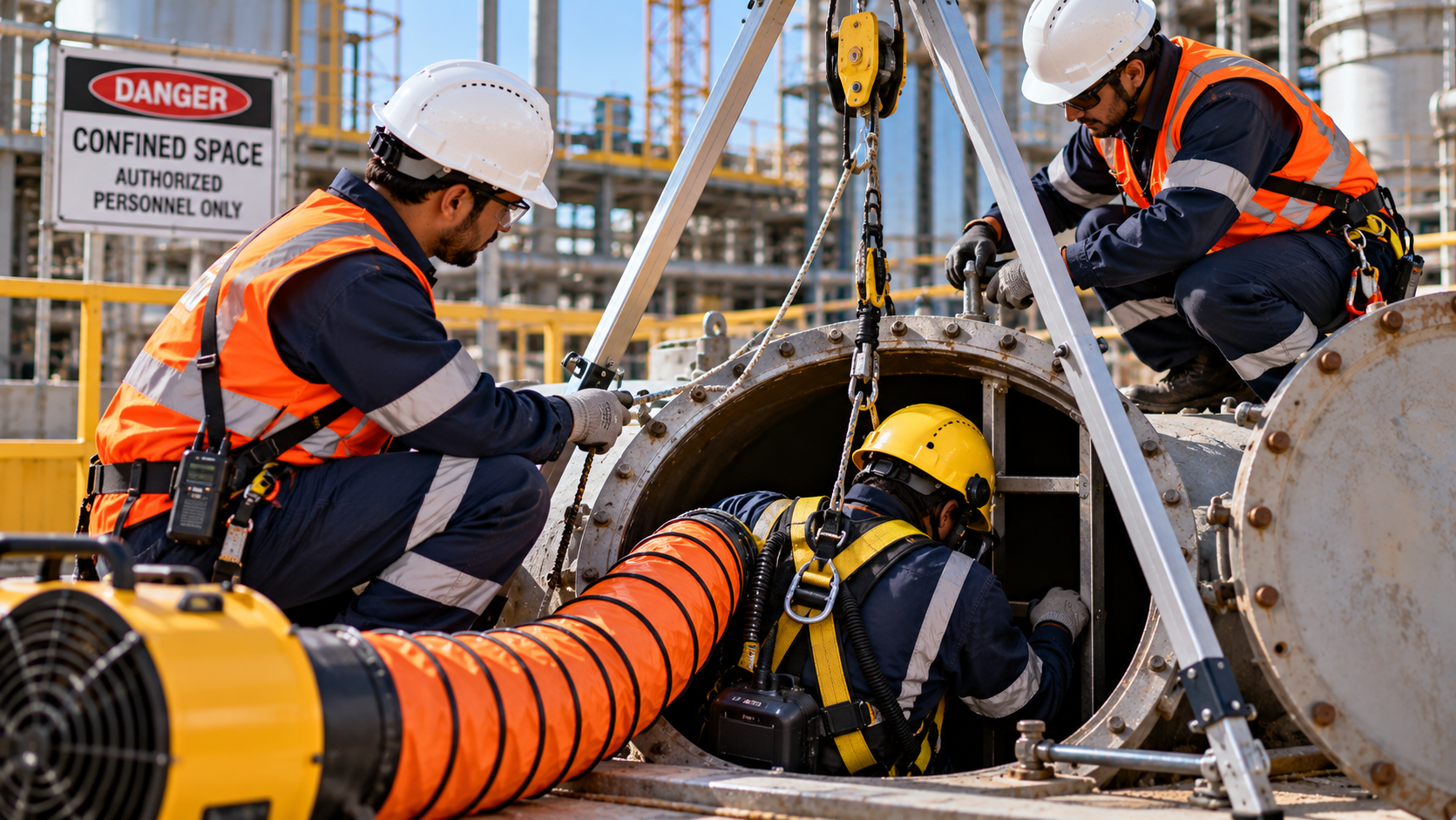
The Confined Space Safety course provides essential knowledge and practical guidance on identifying, assessing, and controlling the hazards associated with working in confined spaces. It helps learners understand the risks involved in entering areas such as tanks, vessels, pipelines, storage containers, manholes, and underground chambers where limited access, poor ventilation, or hazardous atmospheric conditions can create serious safety concerns. The course covers common confined space hazards, including oxygen deficiency, toxic gases, flammable atmospheres, engulfment, and restricted movement. Learners also gain an understanding of atmospheric testing, ventilation procedures, entry permits, isolation of hazardous energy sources, and the proper use of personal protective equipment (PPE). In addition, the course emphasizes the responsibilities of authorized entrants, attendants, and supervisors, along with the importance of effective communication, emergency response planning, and rescue procedures. By applying these safety principles, participants can help prevent workplace accidents, reduce exposure to dangerous conditions, and maintain a safer working environment across construction, manufacturing, maintenance, and oil and gas operations.
What you study
- Risk Assessment and Accident Prevention
- Emergency Response and Confined Space Rescue Procedures
- Roles and Responsibilities of Entrants, Attendants, and Supervisors
- Personal Protective Equipment (PPE) and Safety Equipment
- Ventilation and Hazardous Energy Isolation
- Atmospheric Testing and Continuous Monitoring
- Confined Space Entry Permits and Authorization Procedures
- Atmospheric Hazards, Oxygen Deficiency, and Toxic Gases
- Confined Space Entry Permits and Authorization Procedures
- Identification of Confined Spaces and Associated Hazards
Course Details
Training Provider
OSHAffiliated.us
Course Name
Confined Space Safety
Classes
- Apply For Admission
- WhatsApp a Branch
Certificate Sample
